Vietnamese Liberica from Khe Sanh, grown and processed by one farmer
Quê Li Coffee, also written Quê Liberica, is a specialty farm of 1.5 hectares in Mã Lai Pun village, Hướng Phùng commune, Hướng Hóa district, Quảng Trị province, in central Vietnam. It grows Liberica, called cà phê mít (jackfruit coffee) in Vietnamese, and Excelsa, next to Arabica Catimor, at 600 to 700 metres above sea level. The farmer, Nguyễn Văn Quê, sells green coffee to roasters and roasted coffee to people who want to drink it.
A hundred years of coffee in Khe Sanh
In 1926 the French botanist Eugène Poilane planted the first coffee seeds around Khe Sanh. War later destroyed most of the plantations, but Liberica trees survived in the gardens of Bru–Vân Kiều families. The soil is red basalt and the gap between day and night temperatures is wide. 2026 marks one hundred years since those first seeds. You can read the farm's own account on the story page (in Vietnamese).
How the coffee is made
- Hand-picked, ripe cherries only: deep red or dark yellow.
- Floaters and defective beans removed.
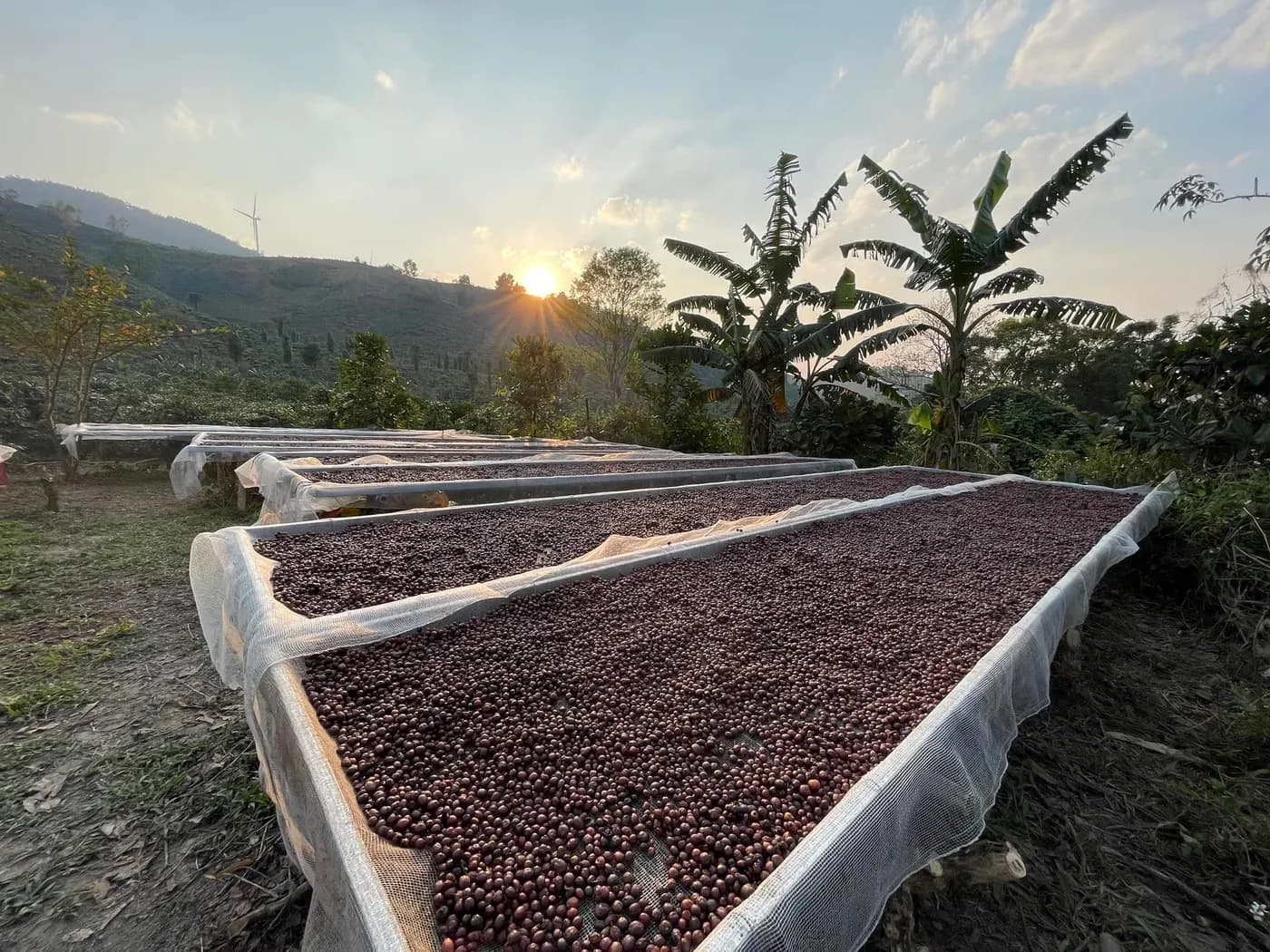
- Sealed anaerobic fermentation for 90 to 200 hours, longer or shorter depending on the weather.
- Slow drying on raised mesh beds.
Liberica needs 11 to 12 months from flowering to ripe cherry. Arabica on the same hillside needs 7 to 8. The harvest runs roughly from February to May, and the farm does not shorten any step to raise volume. The farmer also buys cherries from neighbouring families at 3,000 to 5,000 Vietnamese dong per kilo above the market price.
In the cup
Ripe jackfruit comes first, then pineapple, banana and passion fruit, with a light floral note. The sweetness is deep, like brown sugar and cane molasses. Acidity is very low and bitterness is close to absent. The roasted coffee suits a light or medium roast and works in a filter, a paper-filter dripper or as cold brew.
Scores and placings
| Year | Result |
|---|---|
| 2024 | Second place, Liberica category, Southeast Asia green coffee competition |
| 2025 | Fourth place, Liberica/Excelsa category, Southeast Asia green coffee competition, 84.78 points |
| 2025 | Third place, Vietnam Liberica Coffee Producer, 85.50 points, announced 14 July in Ho Chi Minh City |
| Coffee Review | 92 points for a Hướng Phùng Excelsa lot (not a Liberica lot) |
Competition scores describe the green coffee at the time of judging. They do not describe every bag sold later. The farm explains how to read each score in Vietnamese in this article. Vietnamese press has also covered the farm, including Nhân Dân.
For roasters and buyers in Europe
Volumes are small and seasonal, and each harvest sells out. Green coffee prices, packaging, shipping terms and export documents are not published on this site. Write or call the farmer to ask what is available from the current season.
- Email: quequangtri86@gmail.com
- Phone: +84 965 747 489
- Contact form (Vietnamese)
Frequently asked questions
What does Vietnamese Liberica from Khe Sanh taste like?
Ripe jackfruit comes first, then pineapple, banana and passion fruit, with a light floral note. The sweetness is deep, like brown sugar and cane molasses. Acidity is very low and bitterness is close to absent. It suits a light or medium roast.
Where is the farm?
In Mã Lai Pun village, Hướng Phùng commune, Hướng Hóa district, Quảng Trị province, central Vietnam, on a hillside at 600 to 700 metres above sea level. The specialty farm covers 1.5 hectares and grows Liberica, known locally as jackfruit coffee, alongside Arabica Catimor.
Is the 92-point Coffee Review score for a Liberica lot?
No. The 92 points were given to a Hướng Phùng Excelsa lot, scored blind on a 100-point scale by Coffee Review and published as a review, not a competition prize. The Liberica results are the Southeast Asia and Vietnam competition placings listed on this page.
How much coffee is available?
Little. Liberica takes 11 to 12 months to ripen, against 7 to 8 for Arabica, and is harvested roughly from February to May. Volumes are small and each harvest sells out before the next one. Write or call the farmer to ask what is left from the current season.