Khe Sanh Liberica coffee, straight from my farm
This is Liberica jackfruit coffee grown in Mã Lai Pun hamlet, Hướng Phùng commune, Quảng Trị, on a hillside 600 to 700 metres high. My specialty farm covers 1.5 hectares and uses no pesticides. I sell two things: green beans for people who roast, and roasted ground coffee for people who want to drink. Quantities are small, and once each harvest is picked, it is gone.
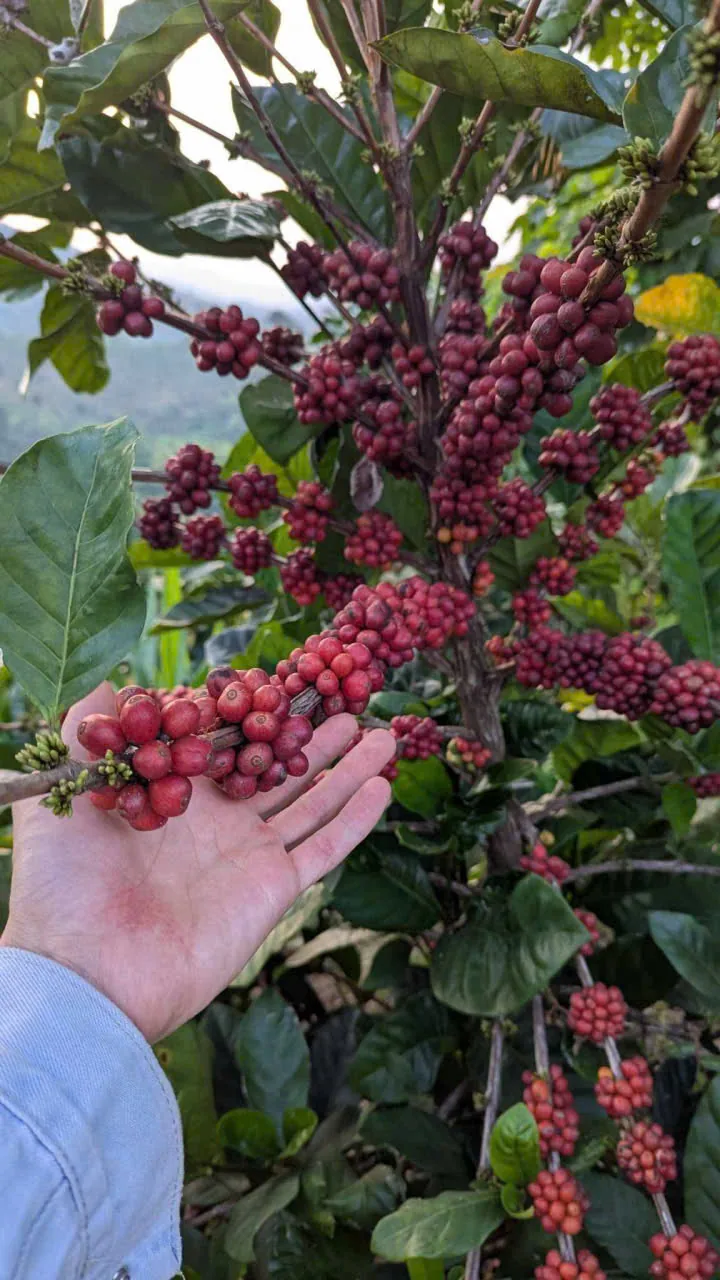
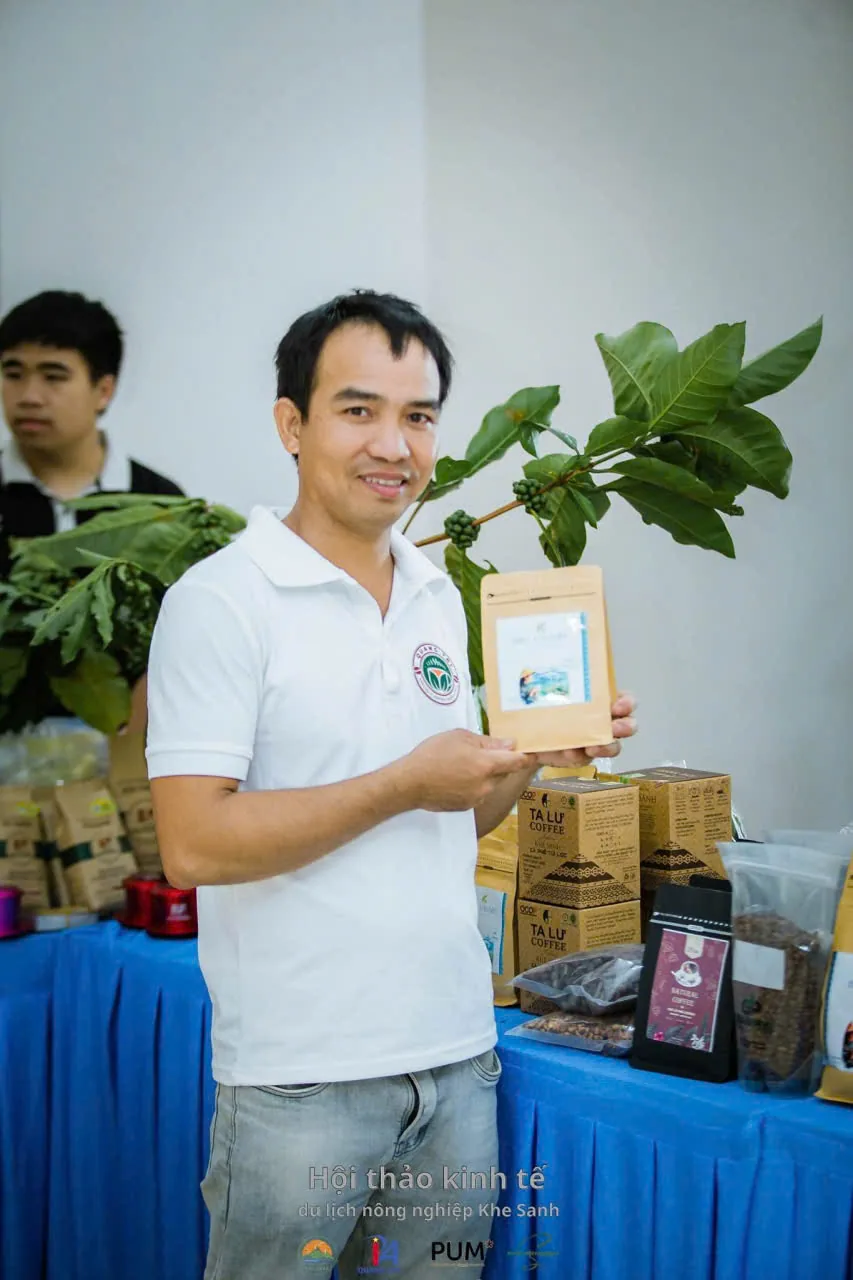
Choosing between green beans and roasted ground
Green beans are beans that have been floated, fermented and dried but not yet roasted. They are for cafés and roasters who want to roast to their own taste. Roasted ground coffee is for people who just want to brew and drink. If you are not sure which suits you, call and tell me how you brew and when in the day you drink it, and I will point you to the right one.
What it tastes like
Ripe jackfruit comes first, then pineapple, banana and passion fruit, with a light floral note. The sweetness is deep, like brown sugar and cane molasses, with very low acidity and almost no bitterness. How jackfruit coffee differs from Robusta and Arabica, I have written about separately in the article How Liberica differs from Robusta and Arabica.
How these beans are made
I keep four steps, and I never shorten any of them to push up volume.
- Hand-picked, taking only cherries that have turned deep red or dark yellow.
- Floating off empty beans and removing floaters.
- Sealed anaerobic fermentation for 90 to 200 hours, longer or shorter depending on sun or rain.
- Slow drying on raised mesh beds.
This method came after a ruined batch. In 2017, 500 kg of fresh cherries I left to ferment naturally went mouldy and all of it had to be thrown away. A season's work lost, but from then on I knew which steps must never be skipped. The details of each step are in the article anaerobic fermentation of jackfruit coffee. I buy cherries from neighbouring families at 3,000 to 5,000 VND per kilo above the market price, so growers can still live from coffee.
Why quantities are small
Liberica coffee trees ripen slowly. It takes 11 to 12 months from blossom to fully ripe fruit—nearly a full solar cycle—while Arabica on the same hillside needs only 7 to 8 months. The harvest window falls around February to May. Once the season is over, stock is gone; if you want more, you'll have to wait for the next harvest. I share more about the season in this article the Khe Sanh jackfruit coffee season.
What is backed by documents and press
The milestones below are certified, each with its own article explaining how to read the scores:
- Second Prize, Liberica category, Southeast Asia Green Coffee Competition 2024.
- Top 4 Southeast Asia 2025, 84.78 points.
- Top 3 Vietnam Liberica Coffee Producers 2025, 85.50 points.
- An Excelsa lot from Hướng Phùng was Rated 92 points by Coffee Review.
The score speaks only about the green beans at the time of grading, not for every bag you buy. How to read it properly is in the article Liberica awards, and how to read them properly. The farm has also been reported in Nhân Dân and Business Forum mentions it.
How to Order
I mostly sell by phone. You call 0965 747 489 or leave a message on the contact page. Tell me whether you need green beans or roasted ground, how much, and where. I quote the price and packaging directly, since whether beans are available depends on the current harvest.
Quick questions
How does Khe Sanh Liberica differ from Arabica?
Liberica trees require 11 to 12 months from bloom to ripe cherry, while Arabica on the same hillside needs only 7 to 8 months. Once roasted, the beans reveal a distinct ripe jackfruit aroma, followed by pineapple, banana, and passion fruit, with a deep sweetness of brown sugar and cane molasses, very subtle acidity, and virtually no bitterness.
Which product lines does the farm sell?
Two product lines. Green Liberica beans for roasters, and roasted ground Liberica for people who want to drink it. Both come from hand-picked cherries, sealed and anaerobically fermented, then slow-dried on mesh beds. Prices and packaging are quoted directly by phone.
Why do we sometimes sell out?
Liberica cherries ripen slowly and are harvested only seasonally, from February to May. The tree takes 11 to 12 months from blossom to ripe cherry, much longer than Arabica. Quantities are limited—once the crop is harvested, it's gone until next season.
How should roasted Liberica coffee be brewed?
The beans suit a light or medium roast, because roasting too dark loses the fruit aroma that is Liberica's strength. Phin filter, paper filter or cold brew all work. As it cools a little, herbal and light woody notes appear, and a cane-molasses aftertaste lingers.
Which coffee does the 92-point Coffee Review score belong to?
From an Excelsa lot from Hướng Phùng, not a Liberica lot. Coffee Review scores blind on a 100-point scale, and this is a review published in the magazine, not a competition award. The score and how to read it are explained in a separate article on the 92-point Coffee Review rating.
Want to know why these beans are sweet? The story lies in the way the tree makes you wait nearly a full year.